Apple or European crab apple: how to tell them apart?
Apple and European crab apple look alike and are often mixed up. Here is how to tell them apart, feature by feature, with their photos and the details to look for.
⚡ The quick answer
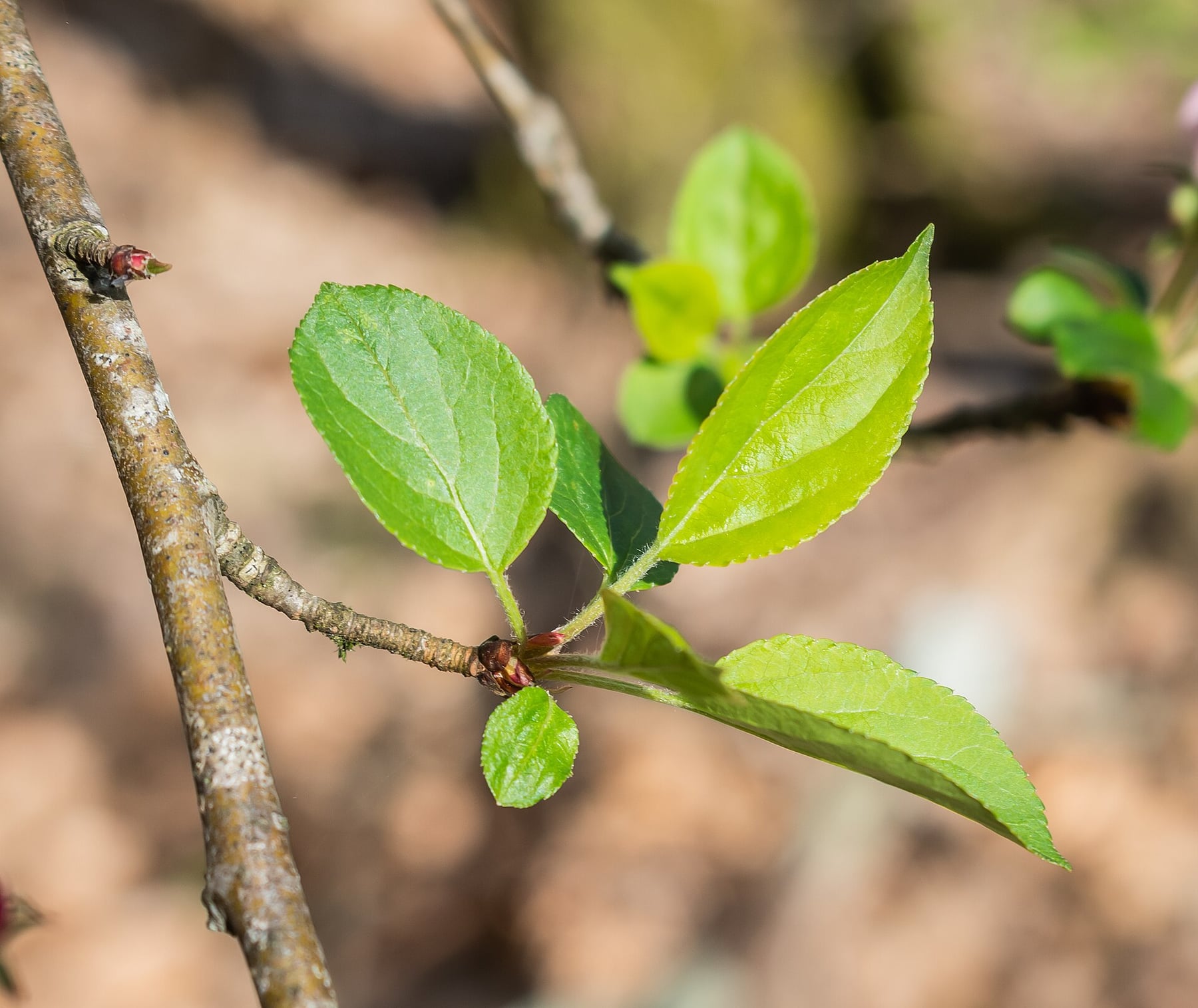
Apple
Malus domestica
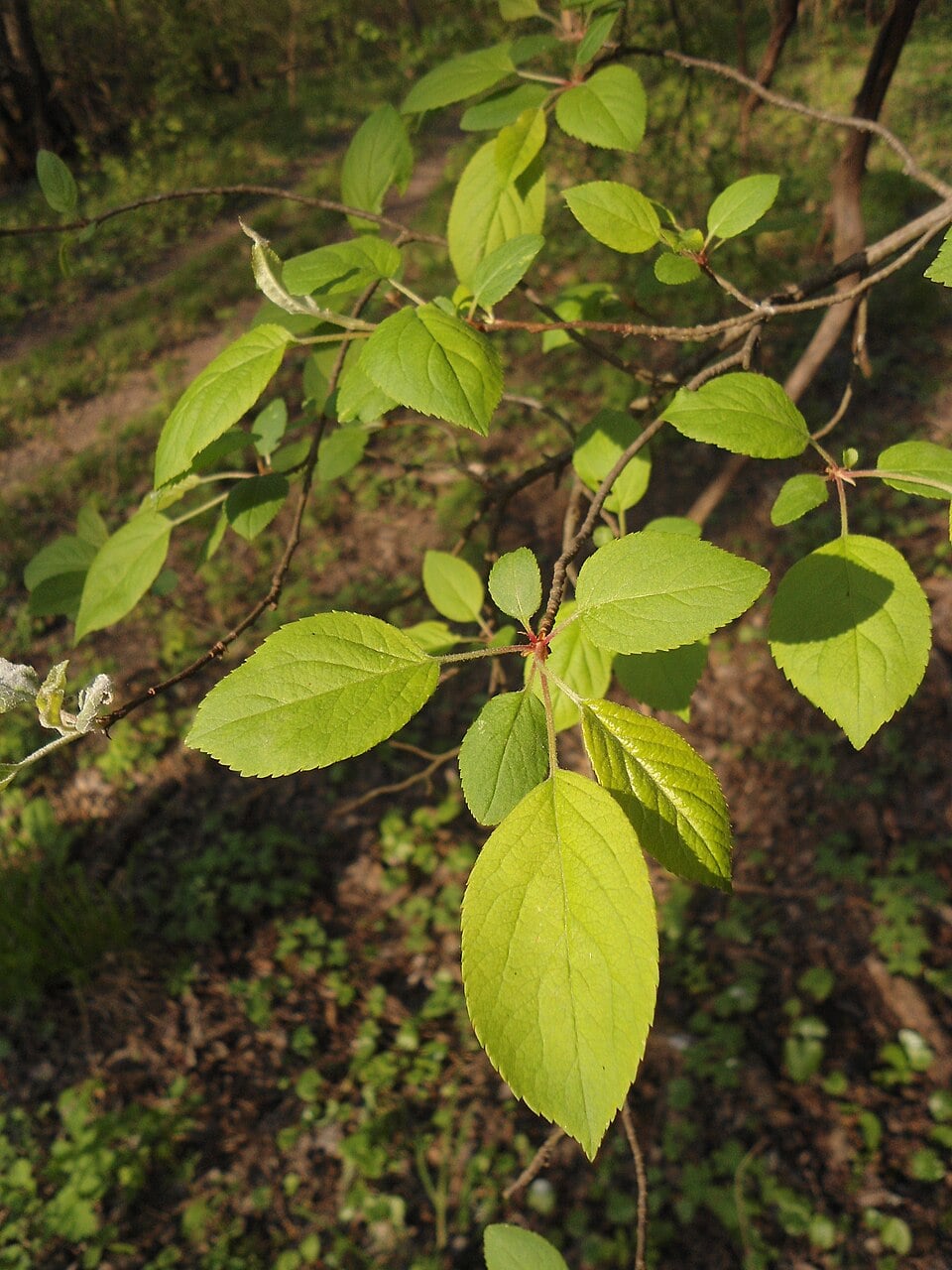
European crab apple
Malus sylvestris
The European crab apple has smaller, sour fruits, and often thorny twigs — the cultivated apple has none.
🍃 Leaves
Ovate, finely toothed, slightly downy underneath, short petiole
Ovate, finely toothed, slightly downy underneath
🌸 Flowers
White to pinkish, 5 petals, borne in corymbs, rich in nectar
Pinkish-white, five petals, clusters of 3 to 6 flowers
🍎 Fruits
Fleshy, round apple, red, yellow or green depending on the variety
Small green to yellow apples, sour and hard
🪵 Bark
Greyish-brown, becoming fissured with age
Greyish-brown, cracking into small square plates
📏 Size
3 to 10 m tall depending on the rootstock
5 to 10 m tall
🗺️ Habitat
Orchards and gardens; cultivated throughout temperate Europe
Hedgerows, woodland edges, open woods
⚠️ Toxicity
Fruit flesh edible; the pips contain a small amount of amygdalin (a cyanide precursor), harmless except when swallowed in large quantities after being chewed
Pips contain small amounts of cyanogenic glycosides, as in many Rosaceae; fruit flesh harmless
🔎 And from the European crab apple side
The European crab apple has smaller, sour fruits, and often thorny twigs — the cultivated apple has none.
🌿 Go further
Want to practise spotting these details on real photos? Floraneo offers profiles and quizzes for dozens of look-alike species.
ℹ️ Educational profile — do not use it to judge whether a plant is edible or safe.