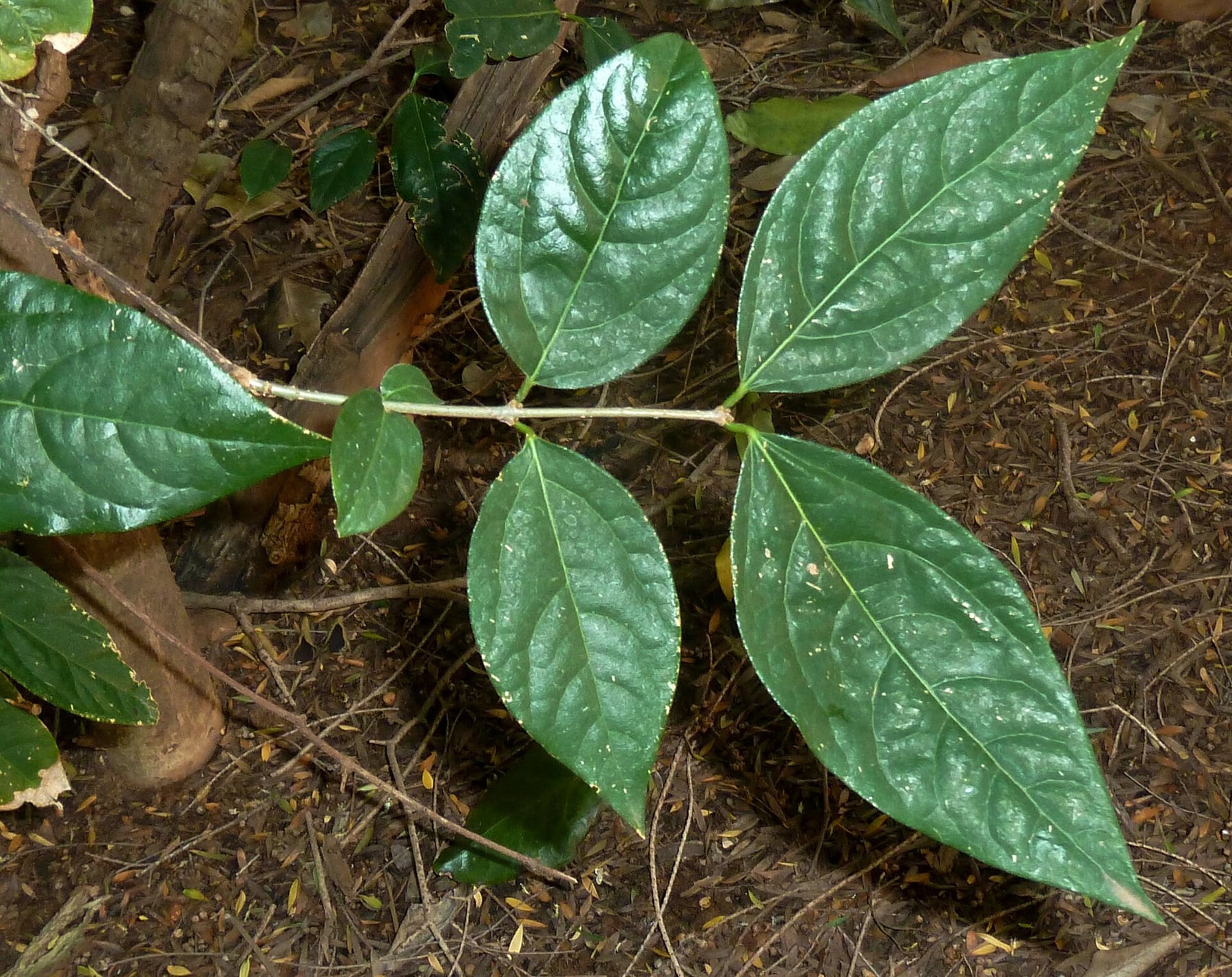
Leaf
JMK, Wikimedia · CC BY-SA 3.0
Wintersweet
Chimonanthus praecox (L.) Link
Family: Calycanthaceae
- 2 to 4 m tall, as wide
- Gardens, near entrances and paths for its scent, against a sheltered wall; cool, free-draining soils, sun to partial shade
- Full sun, Part shade
- Hardy to about -15°C; the buds dislike harder frosts
In flower from December to February
3 months❓ How do you recognise this plant?
Its waxy, almost translucent flowers open in midwinter and scent the whole garden; the shrub has no leaves yet at that point, flowering on bare wood. Wintersweet has pale yellow waxy flowers shaped like small bells, marked with purple at the centre, on bare stems; witch hazel has flowers made of four crinkled strap-like petals like ribbons, yellow to orange, and leaves that turn orange in autumn.
🍃 Leaves
Deciduous, opposite, ovate to lanceolate, 5 to 15 cm, pointed, rough above; they turn yellow in autumn before falling
🌸 Flowers
Bell-shaped, open flowers 2.5 cm across, waxy and translucent in appearance, pale yellow outside and marked with purple at the centre, strongly scented, opening on bare stems
🍎 Fruits
Urn-shaped false fruits 4 to 5 cm, grey-brown, containing several achenes
🪵 Bark
Grey-brown, fairly smooth stems
Distribution, pollinators, uses
🗺️ Distribution
Native to central China; grown in Europe since the 18th century
🐝 Value for pollinators
Winter flowering offering a little pollen to the few insects active in mild weather
✂️ Horticultural uses
Specimen shrub planted for the powerful scent of its winter flowers, also for cutting; may take several years to flower after planting
⚠️ Possible toxicity
The seeds contain toxic alkaloids; do not eat them
⚠️ Look-alike species
Wintersweet
Chimonanthus praecox

Hybrid witch hazel
Hamamelis × intermedia
Wintersweet has pale yellow waxy flowers shaped like small bells, marked with purple at the centre, on bare stems; witch hazel has flowers made of four crinkled strap-like petals like ribbons, yellow to orange, and leaves that turn orange in autumn.
ℹ️ Educational profile — do not use it to judge whether a plant is edible or safe.
🌱 This database is constantly evolving — species and information are added and corrected regularly. Spotted a mistake? Report it below.
© Floraneo — profile content is protected; reproduction without permission is prohibited. Photos remain under their own licence (see the credit shown on each photo).