Great yellow gentian
❓ How do you recognise this plant?
⚠️ Possible toxicity
⚠️ Look-alike species
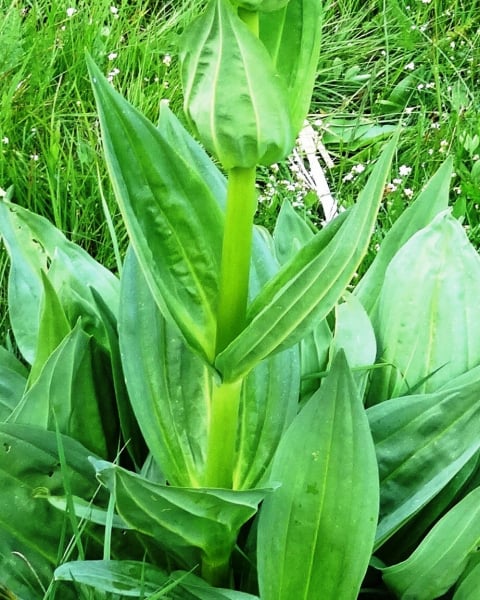
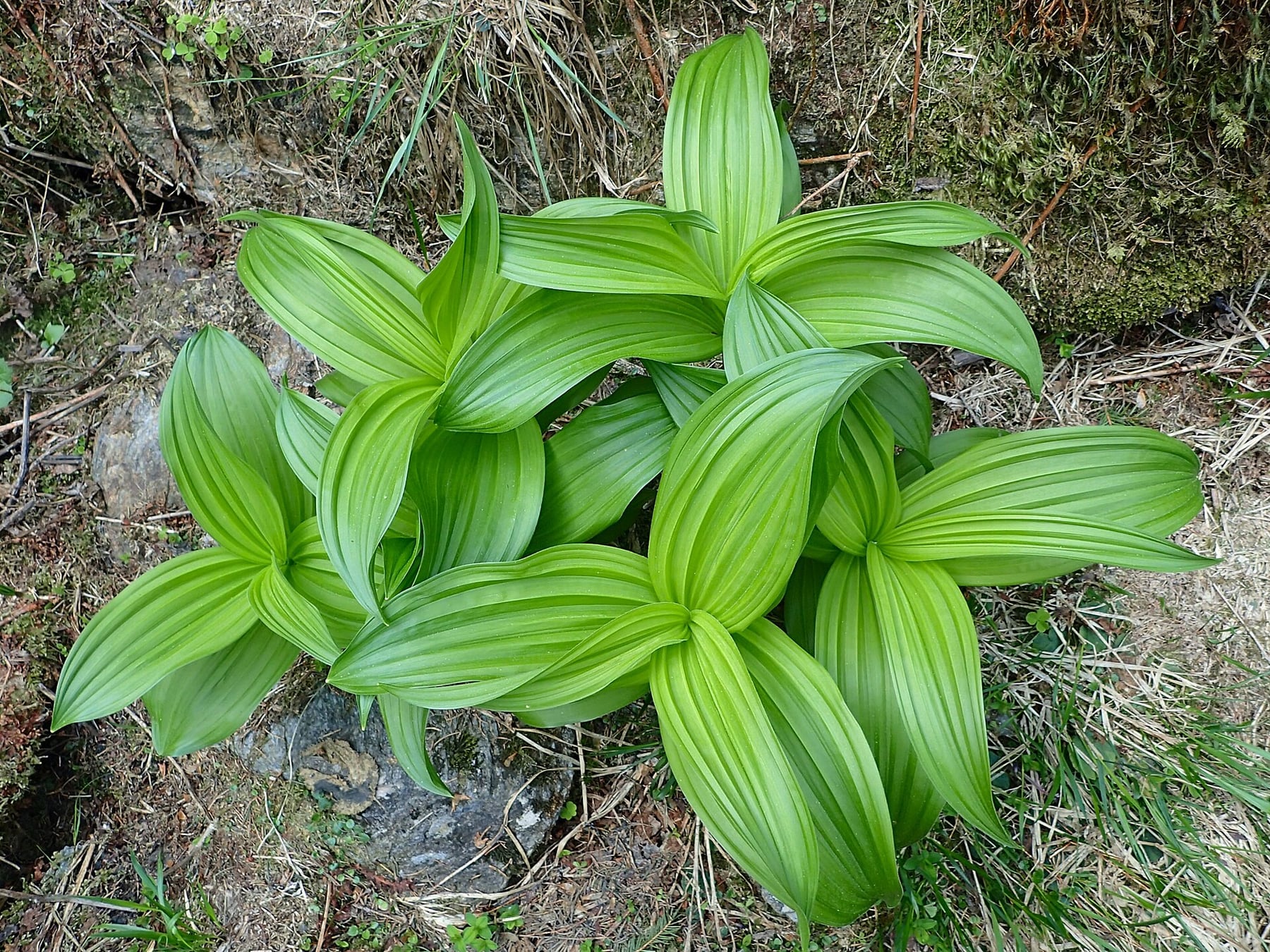
A dangerous and well-documented confusion, especially when not in flower and only the leaves are visible: great yellow gentian has opposite leaves, whereas white false hellebore has alternate leaves, pleated lengthwise. In flower, the gentian has large bright yellow star-shaped flowers in whorls, whereas the false hellebore has small whitish to greenish flowers in long panicles. These are good clues, but none is a guarantee on its own: if in the slightest doubt about a root or a plant not in flower, never eat it.
🌿 Other Gentianaceae to discover

ℹ️ Educational profile — do not use it to judge whether a plant is edible or safe.
🌱 This database is constantly evolving — species and information are added and corrected regularly. Spotted a mistake? Report it below.
© Floraneo — profile content is protected; reproduction without permission is prohibited. Photos remain under their own licence (see the credit shown on each photo).