Leaf
Enrico Blasutto, Wikimedia · CC BY-SA 4.0
Great horsetail
Equisetum telmateia Ehrh.
Family: Equisetaceae
50 cm to 1.5 m
Springs, seepage ditches, damp clay soils
Flowering: Does not flower — reproduces by spores
Full sun
Part shade
Hardy to -18°C
❓ How do you recognise this plant?
The largest horsetail in Europe, able to exceed one metre in height in dense colonies. Great horsetail is markedly taller and sturdier, with thicker, more densely branched dark green sterile stems, which die back in autumn like those of field horsetail (both being deciduous), whereas field horsetail is smaller and more slender.
🍃 Leaves
Reduced to teeth at each node; sterile stems much branched in dense whorls
🌸 Flowers
No flowers: whitish, fleshy spore-bearing cone appearing early in spring, before the green stems
🍎 Fruits
No fruits — spores released by the early spore-bearing cone
🪵 Bark
Hollow, jointed stems, the tallest horsetails in Europe
🗺️ Distribution
Europe, western Asia, North Africa; common in France on damp clay soils and seepages
🐝 Value for pollinators
Spore-reproducing plant, without flowers or interest for pollinators
✂️ Horticultural uses
Rarely grown in gardens, tolerated in natural wet areas, an indicator of clay soils
⚠️ Possible toxicity
Toxic to horses in large quantities (thiaminase, destroying vitamin B1); traditional human use as a herbal tea at moderate doses
⚠️ Look-alike species
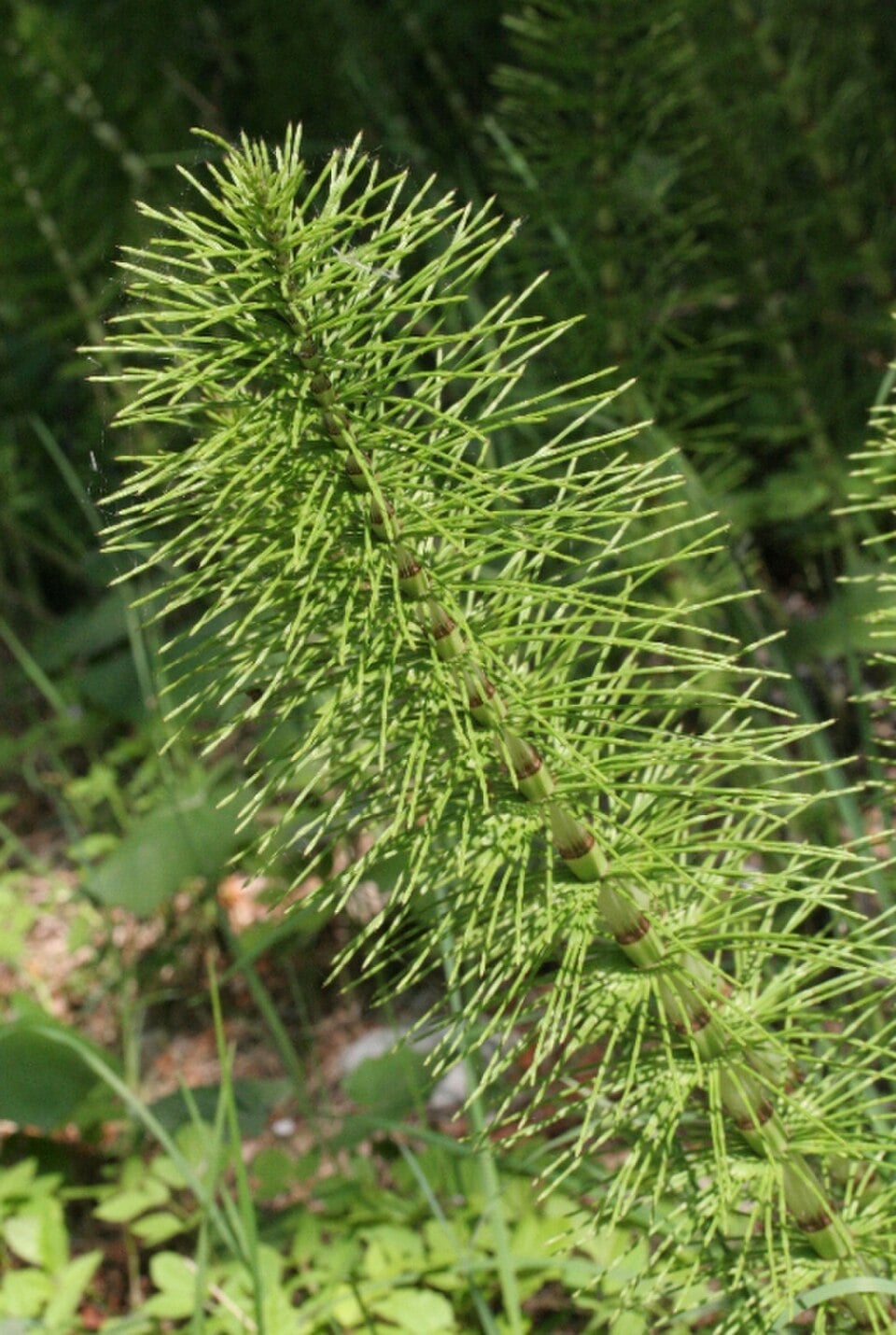
Great horsetail
Equisetum telmateia
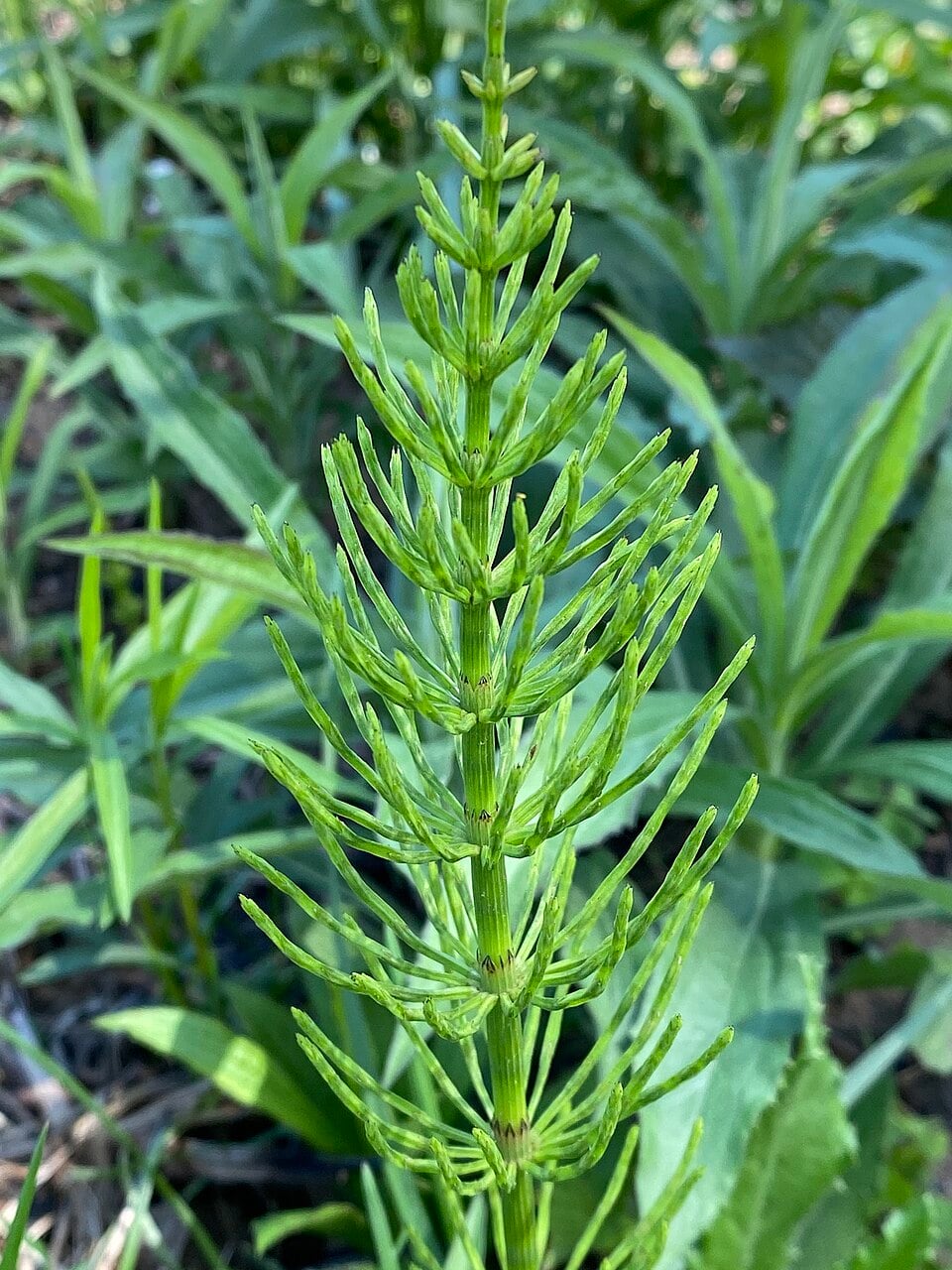
Field horsetail
Equisetum arvense
Great horsetail is markedly taller and sturdier, with thicker, more densely branched dark green sterile stems, which die back in autumn like those of field horsetail (both being deciduous), whereas field horsetail is smaller and more slender.
🌿 Other Equisetaceae to discover
ℹ️ Educational profile — do not use it to judge whether a plant is edible or safe.
🌱 This database is constantly evolving — species and information are added and corrected regularly. Spotted a mistake? Report it below.
© Floraneo — profile content is protected; reproduction without permission is prohibited. Photos remain under their own licence (see the credit shown on each photo).