Leaf
Pierre Bonnet, Tela Botanica · CC BY-SA 2.0
Field elm
Ulmus minor Mill.
Also known as: Smooth-leaved elm
Family: Ulmaceae
15 to 25 m tall
Hedgerows, woodland edges, field margins
Flowering: February – March, before the leaves
Part shade
Full sun
-30°C
❓ How do you recognise this plant?
The base of the leaf is distinctly asymmetrical — a criterion that never fails. Field elm has smooth samaras, without cilia on the margin, whereas European white elm has samaras fringed with long cilia.
🍃 Leaves
Ovate, toothed, base strongly asymmetrical
🌸 Flowers
Small reddish clusters before the leaves appear
🍎 Fruits
Round samaras, wing surrounding the seed at the centre
🪵 Bark
Grey, fissured in an irregular network
🗺️ Distribution
Europe, Asia Minor, North Africa; present in France but badly affected by Dutch elm disease since the 20th century
🐝 Value for pollinators
Very early flowering (before the leaves), pollen appreciated by bees in late winter
✂️ Horticultural uses
Formerly widely planted in avenues and country hedgerows, now limited by Dutch elm disease
⚠️ Possible toxicity
No known toxicity
⚠️ Look-alike species
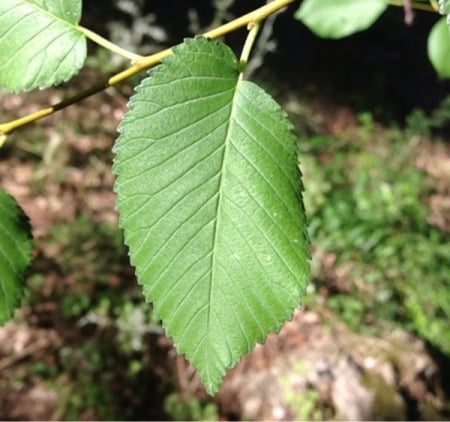
Field elm
Ulmus minor
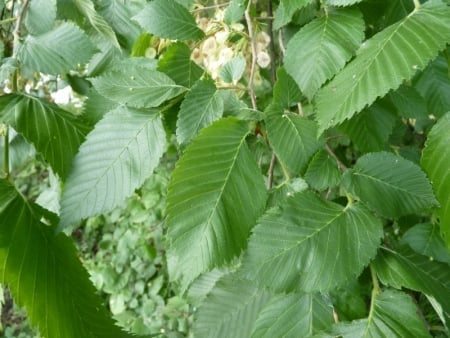
European white elm
Ulmus laevis
Field elm has smooth samaras, without cilia on the margin, whereas European white elm has samaras fringed with long cilia.
🌿 Other Ulmaceae to discover

ℹ️ Educational profile — do not use it to judge whether a plant is edible or safe.
🌱 This database is constantly evolving — species and information are added and corrected regularly. Spotted a mistake? Report it below.
© Floraneo — profile content is protected; reproduction without permission is prohibited. Photos remain under their own licence (see the credit shown on each photo).