Leaf
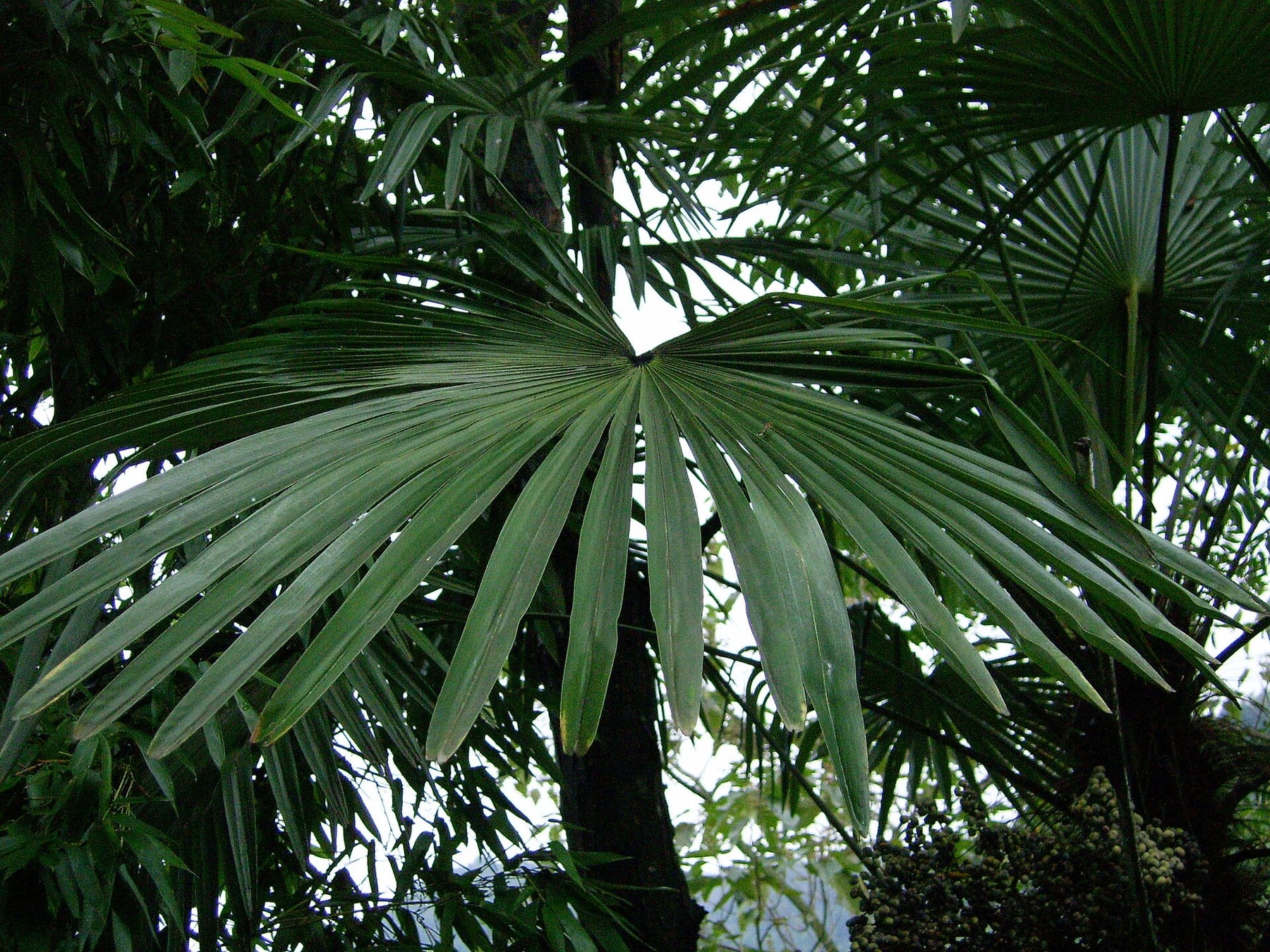
Shizhao, Wikimedia · CC BY-SA 3.0
Chusan palm
Trachycarpus fortunei (Hook.) H.Wendl.
Also known as: Chinese windmill palm, Windmill palm
Family: Arecaceae
- 5 to 12 m tall
- Gardens and streets of coastal regions and towns with mild winters, planted as a specimen or in groups; self-seeds locally
- Full sun, Part shade
- Hardy to about -15°C, briefly -17°C; more sensitive to cold combined with damp
In flower from April to June
3 months❓ How do you recognise this plant?
It is the common palm that best tolerates cold (down to about -15°C): a single slender trunk covered in a felt of brown fibres, and fan-shaped fronds, give it away from afar.
🍃 Leaves
Evergreen, fan-shaped (palmate), 60 to 100 cm across, divided to about halfway into stiff segments; long leaf stalk, toothed along the edges, whose base is wrapped in a brown fibrous sheath
🌸 Flowers
Branched clusters of small pale yellow to yellow-green flowers, on separate male or female plants, appearing at the base of the leaves
🍎 Fruits
Small kidney-shaped drupes about 1 cm across, blue-black to grey and powdery, in clusters on female plants
🪵 Bark
Unbranched, slender trunk covered in a felt of dark brown fibres (remains of the leaf sheaths), hence the name hemp palm
Distribution, pollinators, uses
🗺️ Distribution
Native to China, to mid-altitude regions of the centre and south; introduced to Europe in the 19th century and naturalised locally
🐝 Value for pollinators
Flowers visited by bees and other insects
✂️ Horticultural uses
The most widely planted palm in French gardens: the hardiest of those commonly seen, it gives an exotic air to gardens in the western and southern half of the country
⚠️ Possible toxicity
No notable toxicity known; the toothed leaf stalks can cut
ℹ️ Educational profile — do not use it to judge whether a plant is edible or safe.
🌱 This database is constantly evolving — species and information are added and corrected regularly. Spotted a mistake? Report it below.
© Floraneo — profile content is protected; reproduction without permission is prohibited. Photos remain under their own licence (see the credit shown on each photo).