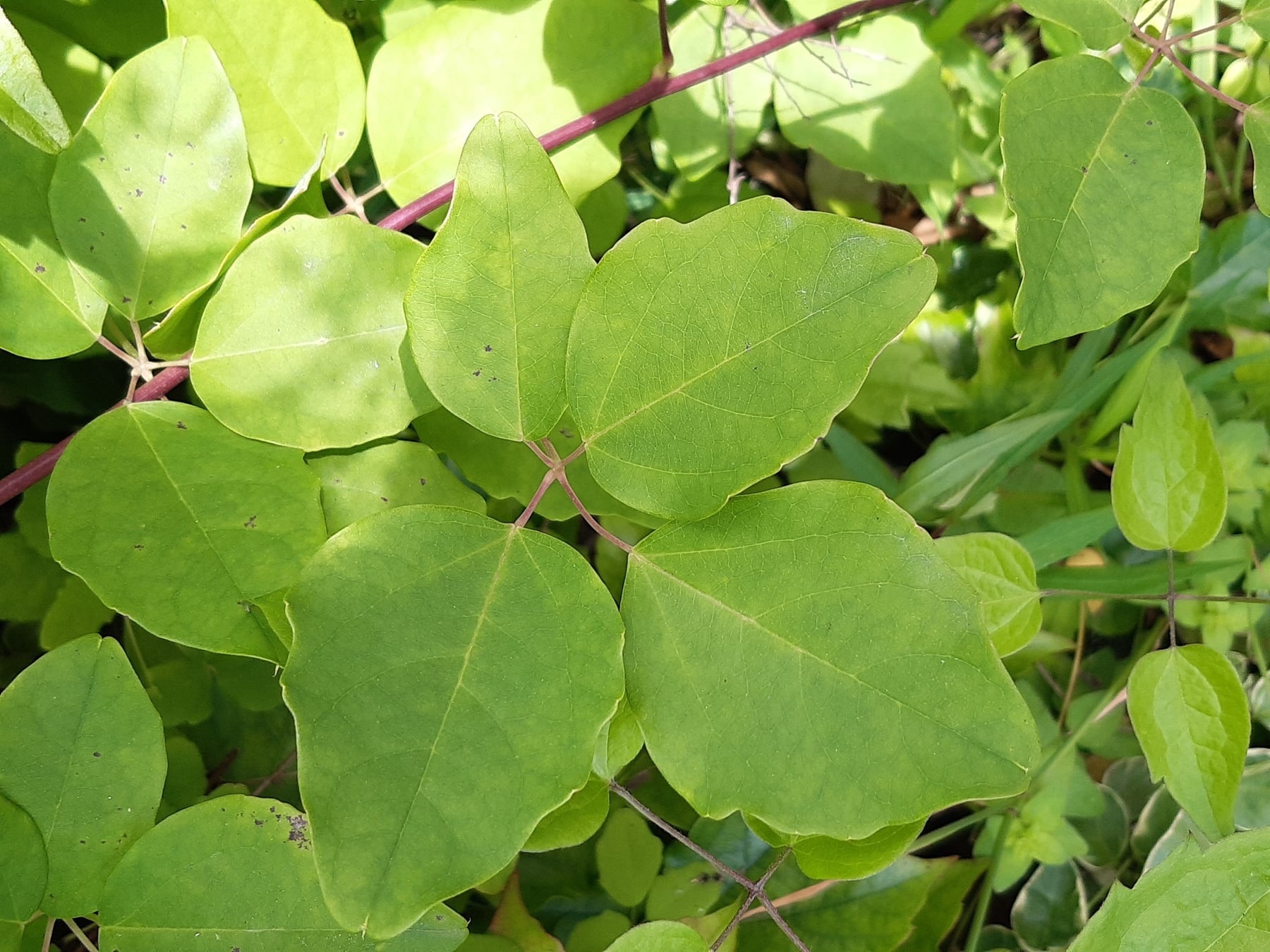
Leaf
Sauvages de Beaumont, Tela Botanica · CC BY-SA 2.0
Chocolate vine
Akebia quinata (Thunb. ex Houtt.) Decne.
Also known as: Five-leaf akebia
Family: Lardizabalaceae
- Climbing vine 6 to 10 m
- Planted on a pergola or trellis, cool, well-drained soils
- Full sun, Part shade
- Hardy, to about -20°C
In flower from March to April
2 months❓ How do you recognise this plant?
The purple fruit of chocolate vine, rarely formed in the French climate because the plant is often self-sterile, reveals at maturity a sweet white pulp whose taste is compared to a tropical fruit jelly.
Learn to recognise it
Rare and exotic climbers. This plant is in the lesson “Rare and exotic climbers”, with 7 others.
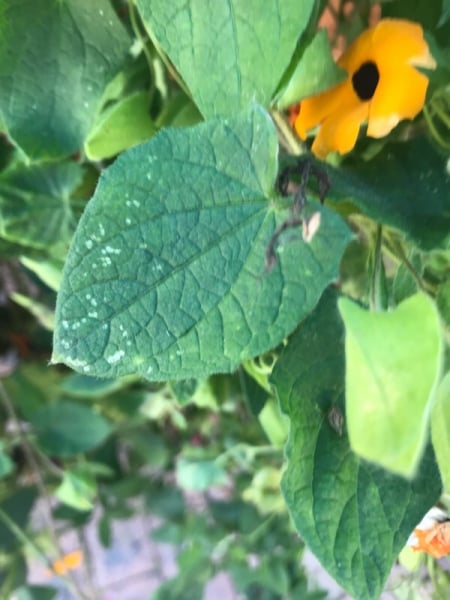
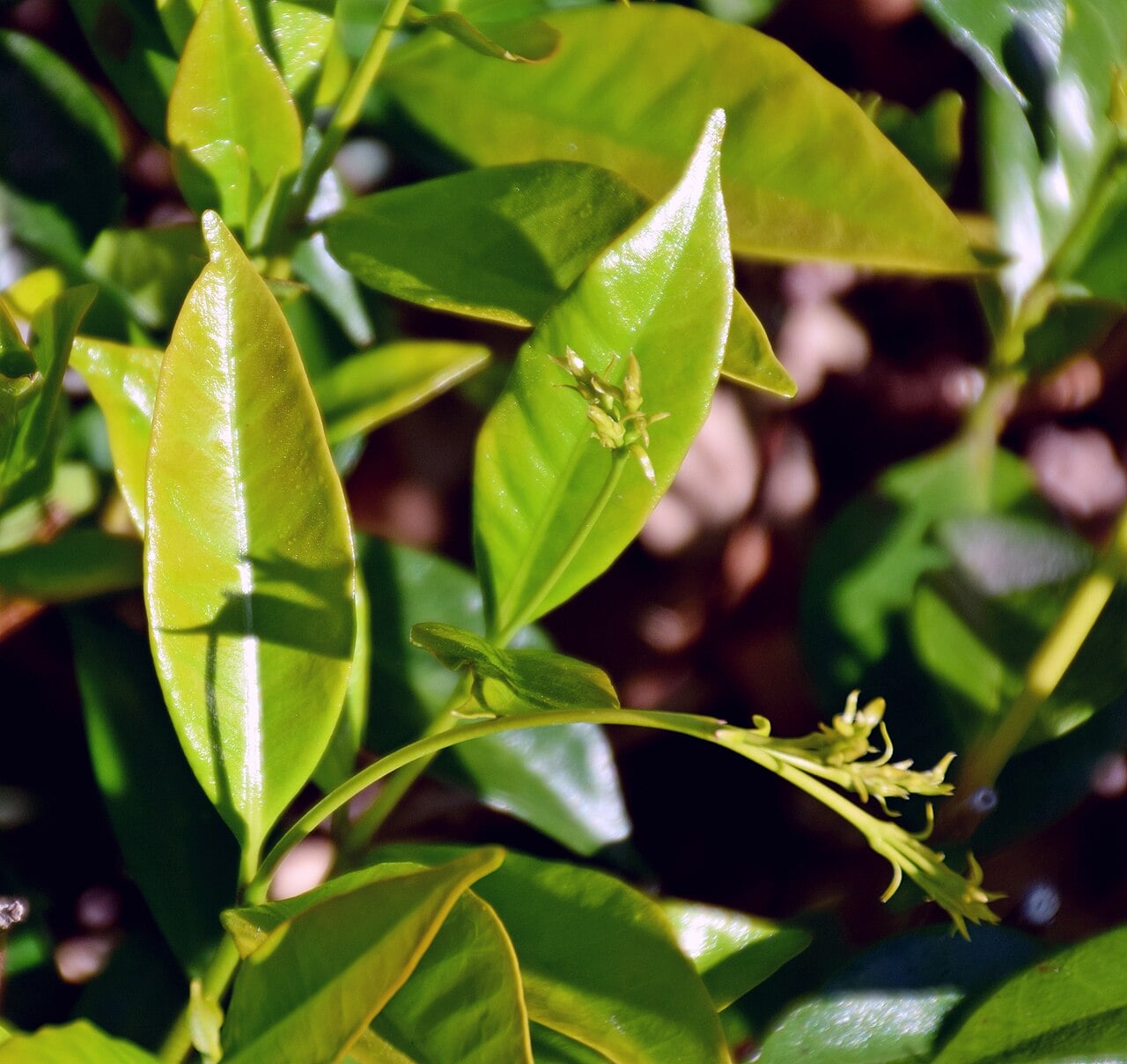
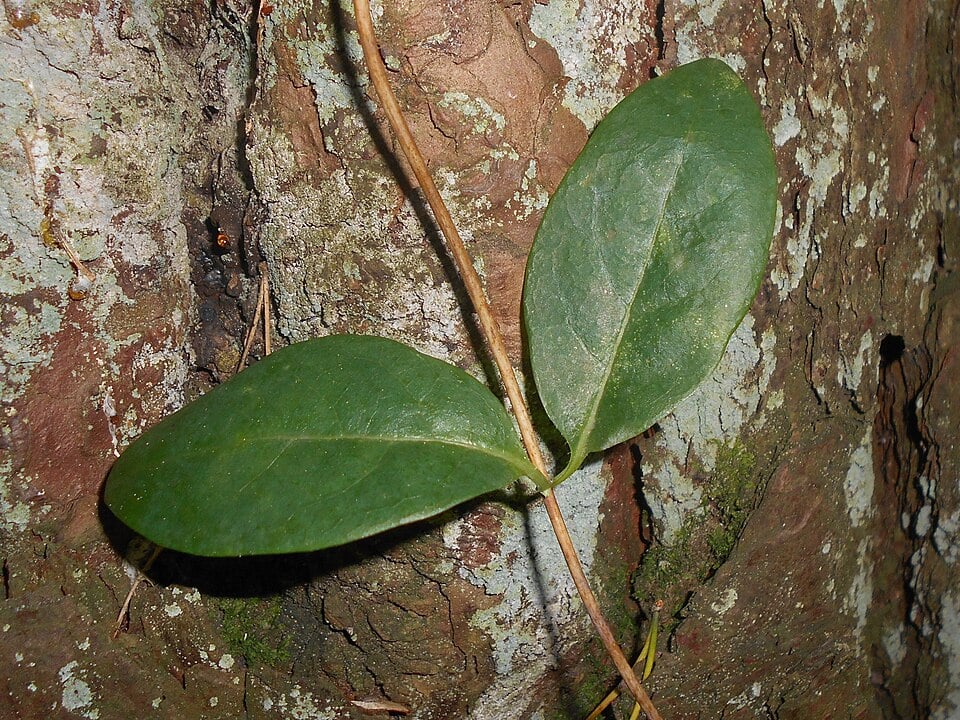
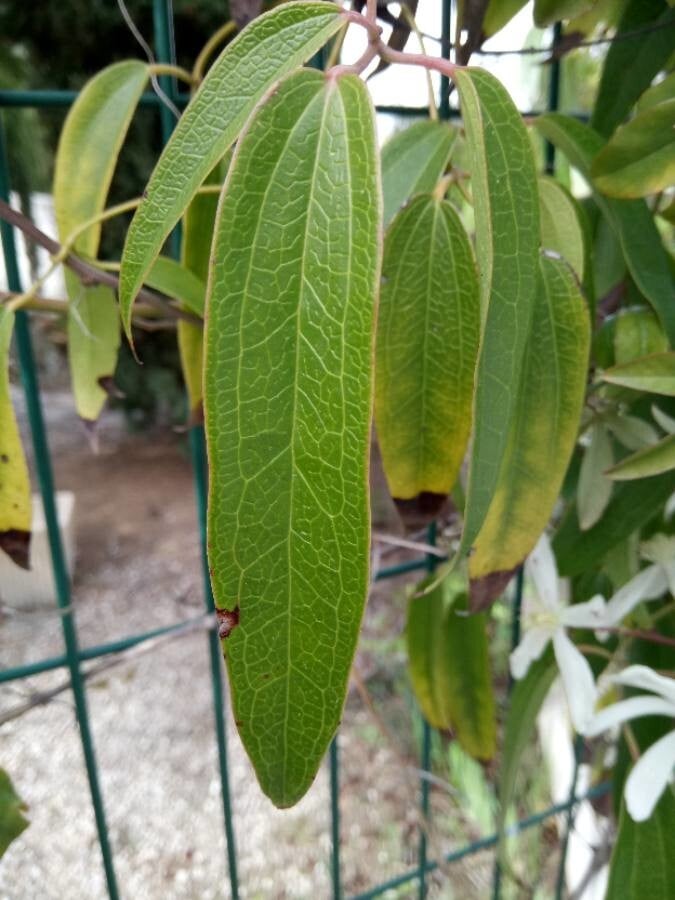
🍃 Leaves
Semi-evergreen, compound with 5 rounded leaflets arranged like a fan
🌸 Flowers
Small, purple-brown, vanilla-scented, grouped in small racemes
🍎 Fruits
Large fleshy purple pod, edible, splitting open when ripe to reveal a sweet white pulp
🪵 Bark
Woody climbing vine with twining stems.
Distribution, pollinators, uses
🗺️ Distribution
Native to Japan, China and Korea; planted in France as an ornamental climber
🐝 Value for pollinators
Fragrant early flowering, appreciated by the first bees of spring
✂️ Horticultural uses
Vigorous ornamental climber planted for its unusual fan-shaped foliage and its unusual edible fruit, rare in French cultivation
⚠️ Possible toxicity
The ripe fruit is eaten in some regions of Asia. Do not conclude from this that all parts of the plant are edible.
ℹ️ Educational profile — do not use it to judge whether a plant is edible or safe.
🌱 This database is constantly evolving — species and information are added and corrected regularly. Spotted a mistake? Report it below.
© Floraneo — profile content is protected; reproduction without permission is prohibited. Photos remain under their own licence (see the credit shown on each photo).