Leaf
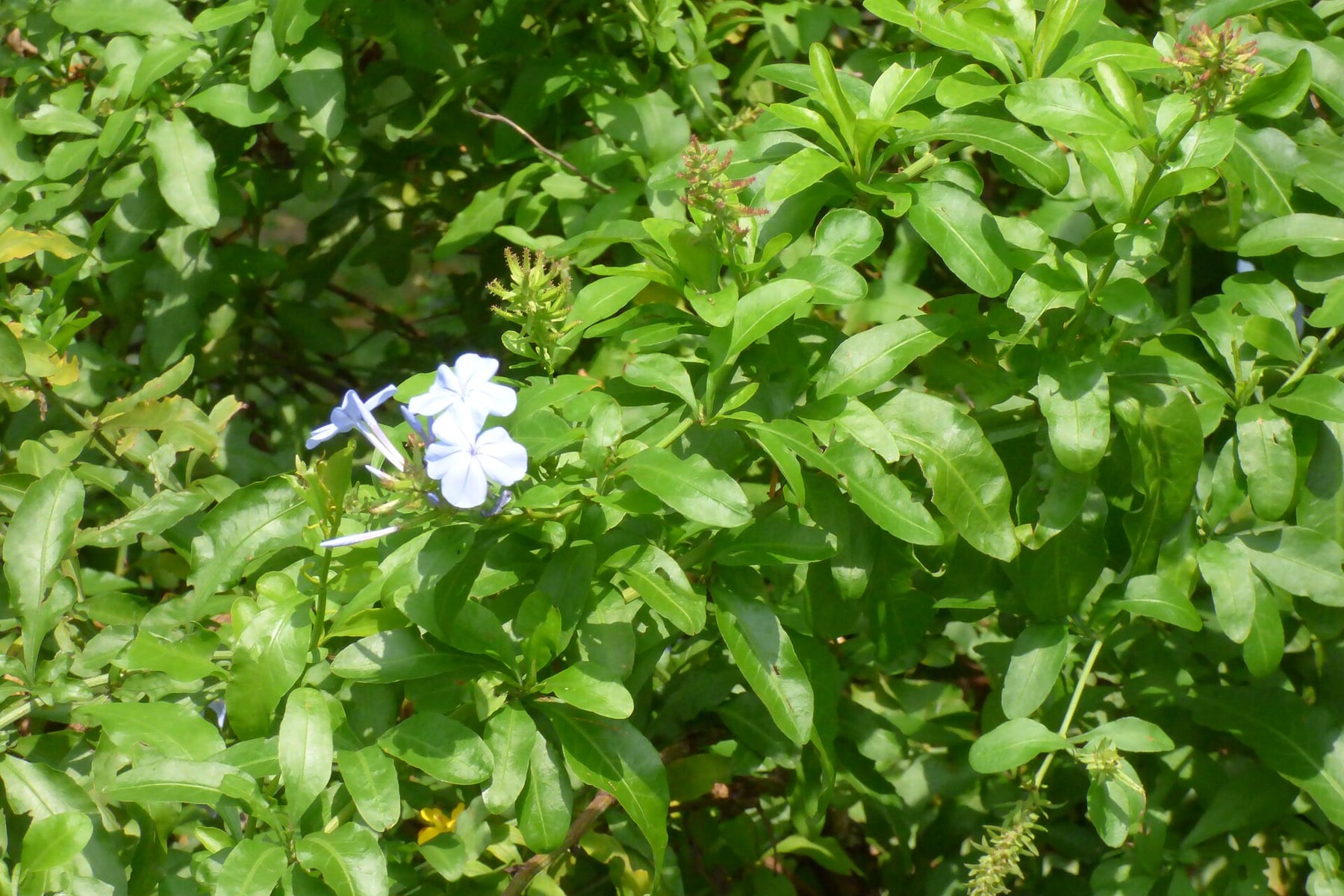
Alejandro Bayer Tamayo from Armenia, Colombia, Wikimedia · CC BY-SA 2.0
Cape leadwort
Plumbago auriculata Lam.
Also known as: Plumbago, Blue plumbago
Family: Plumbaginaceae
- 1 to 3 m tall
- Terraces, walls and hedges of the Mediterranean coast, in pots and brought indoors for winter elsewhere
- Full sun
- Hardy to about -3 to -5°C; regrows from the base after a short frost
In flower from May to October
6 months❓ How do you recognise this plant?
The glandular hairs on its calyx, the green part under the flower, are sticky: they cling to fingers and clothes, a sure clue in addition to the sky-blue flower.
🍃 Leaves
Evergreen to semi-evergreen, small, ovate to spoon-shaped, light green and slightly glaucous, alternate, on supple, scrambling stems
🌸 Flowers
Tubular corolla ending in five sky-blue lobes (sometimes white), in rounded clusters; the green calyx is covered in sticky glandular hairs
🍎 Fruits
Small dry capsules enclosed in the sticky calyx, which clings to clothes and animal fur
🪵 Bark
Slender, flexible stems, green then grey
Distribution, pollinators, uses
🗺️ Distribution
Native to South Africa (Cape region); grown in all warm regions
🐝 Value for pollinators
Flowers heavily visited by butterflies
✂️ Horticultural uses
Terrace shrub with long blue flowering, trained against a wall or grown as a low hedge; to be brought indoors or protected in a cold climate
⚠️ Possible toxicity
The sap can irritate the skin in some people; the plant is considered slightly toxic if eaten
🌿 Other Plumbaginaceae to discover


ℹ️ Educational profile — do not use it to judge whether a plant is edible or safe.
🌱 This database is constantly evolving — species and information are added and corrected regularly. Spotted a mistake? Report it below.
© Floraneo — profile content is protected; reproduction without permission is prohibited. Photos remain under their own licence (see the credit shown on each photo).