Common bistort or Redshank: how to tell them apart?
Common bistort and Redshank look alike and are often mixed up. Here is how to tell them apart, feature by feature, with their photos and the details to look for.
⚡ The quick answer
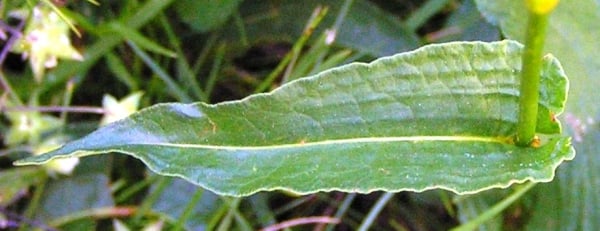
Common bistort
Bistorta officinalis
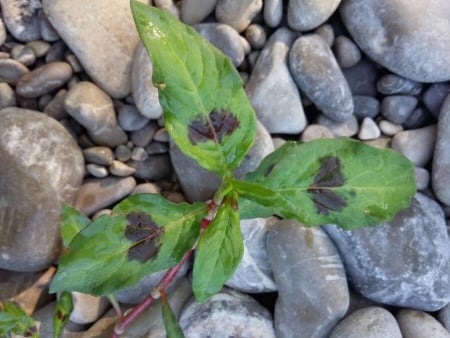
Redshank
Persicaria maculosa
Common bistort has a single, longer cylindrical pink spike at the top of a bare stem, with no blotch on the leaves, whereas redshank has shorter, denser spikes, with often a dark V-shaped blotch on the leaves.
🍃 Leaves
Ovate-lanceolate, heart-shaped at the base, bright green
Lanceolate, often marked with a dark blotch at the centre
🌸 Flowers
Dense cylindrical spikes of small pale pink flowers
Small, bright pink, in dense, compact spikes
🍎 Fruits
Small trigonous achenes
Small brown lens-shaped achene
🪵 Bark
Twisted underground rhizome, erect clump
Knotty herbaceous stem, membranous sheath at each node
📏 Size
40 to 80 cm tall
20 to 80 cm
🗺️ Habitat
Wet meadows, gardens, banks, cool soils
Crops, ditch edges, damp ground
⚠️ Toxicity
No known toxicity, young leaves traditionally edible.
No known toxicity; sap slightly irritant to some sensitive people
🔎 And from the Redshank side
Common bistort has a single, longer cylindrical pink spike at the top of a bare stem, with no blotch on the leaves, whereas redshank has shorter, denser spikes, with often a dark V-shaped blotch on the leaves.
🌿 Go further
Want to practise spotting these details on real photos? Floraneo offers profiles and quizzes for dozens of look-alike species.
ℹ️ Educational profile — do not use it to judge whether a plant is edible or safe.