Mediterranean buckthorn or Common buckthorn: how to tell them apart?
Mediterranean buckthorn and Common buckthorn look alike and are often mixed up. Here is how to tell them apart, feature by feature, with their photos and the details to look for.
⚡ The quick answer
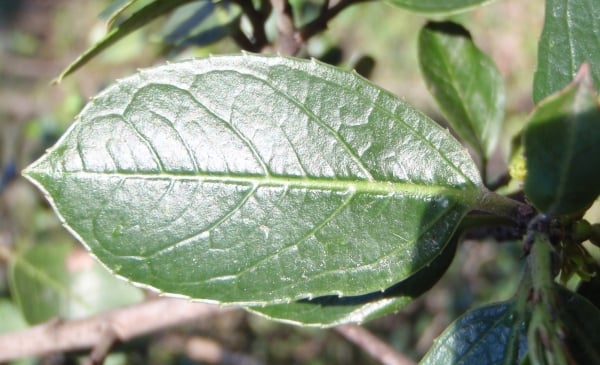
Mediterranean buckthorn
Rhamnus alaternus
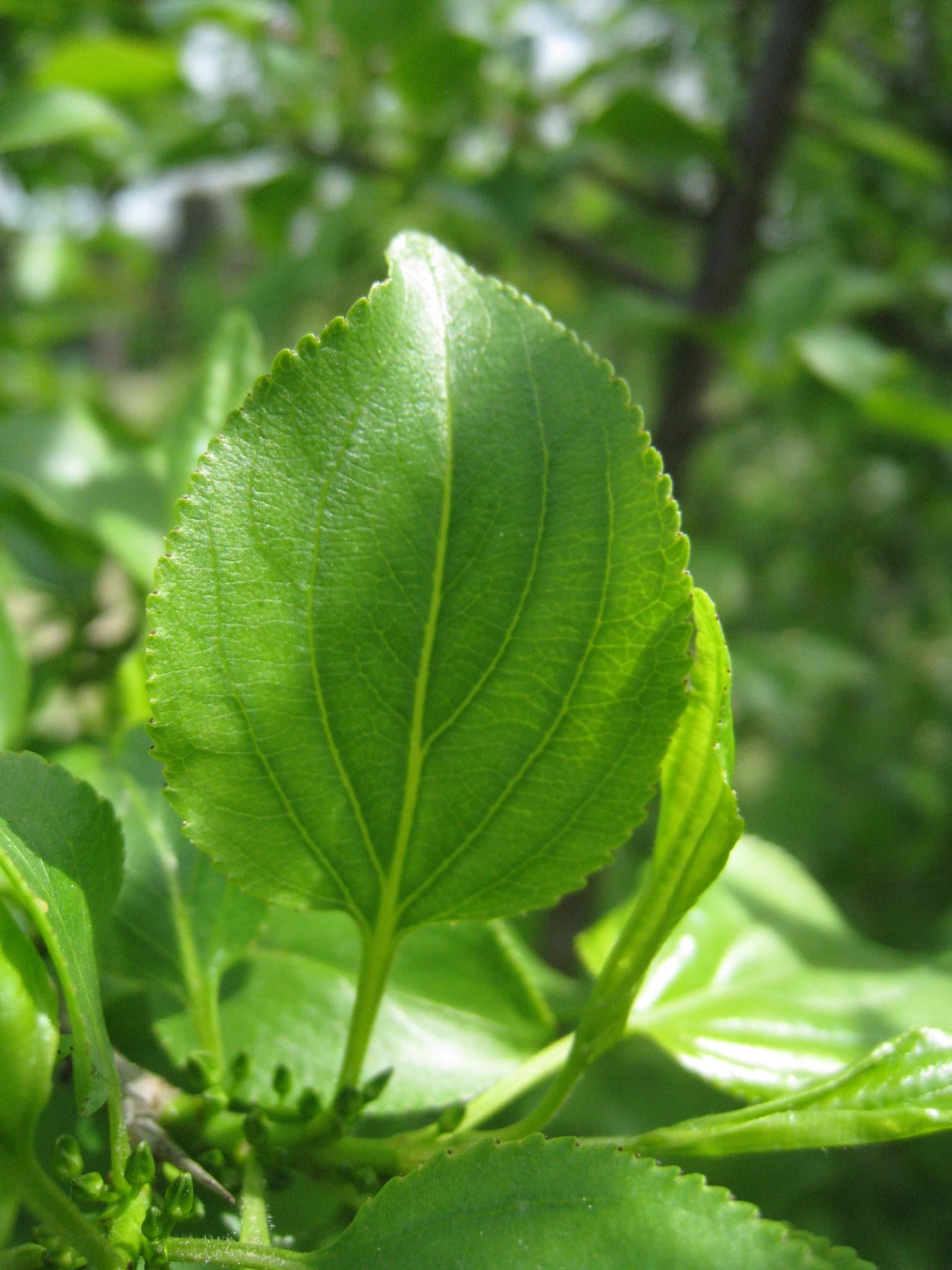
Common buckthorn
Rhamnus cathartica
Purging buckthorn has twigs ending in a thorn and very laxative black fruits, whereas Mediterranean buckthorn is a thornless Mediterranean evergreen shrub with leathery, glossy foliage all year round.
🍃 Leaves
Evergreen, ovate, leathery, glossy dark green
Opposite, ovate, finely toothed, 3 to 4 pairs of arching veins
🌸 Flowers
Tiny greenish flowers, inconspicuous, very rich in nectar
Small, greenish, inconspicuous
🍎 Fruits
Small red berries turning black when ripe
Small black berries, very laxative, hence its name
🪵 Bark
Grey bark, red-brown twigs
Grey to blackish, twigs often ending in a thorn
📏 Size
2 to 4 m tall
2 to 5 m tall
🗺️ Habitat
Garrigue, evergreen hedges, dry gardens, all soils
Hedges and woodland edges on chalky soil
⚠️ Toxicity
Fruits mildly purgative, not recommended for eating (digestive upset), as with other buckthorns.
Fruits strongly purgative and toxic in large quantity, causing severe digestive upset, as its name indicates.
🔎 And from the Common buckthorn side
Purging buckthorn has twigs ending in a thorn and very laxative black fruits, whereas Mediterranean buckthorn is a thornless Mediterranean evergreen shrub with leathery, glossy foliage all year round.
🌿 Go further
Want to practise spotting these details on real photos? Floraneo offers profiles and quizzes for dozens of look-alike species.
ℹ️ Educational profile — do not use it to judge whether a plant is edible or safe.