Common pear or Wild pear: how to tell them apart?
Common pear and Wild pear look alike and are often mixed up. Here is how to tell them apart, feature by feature, with their photos and the details to look for.
⚡ The quick answer
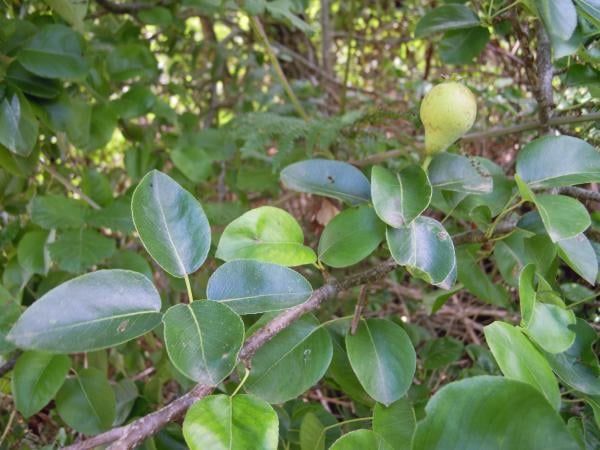
Common pear
Pyrus communis
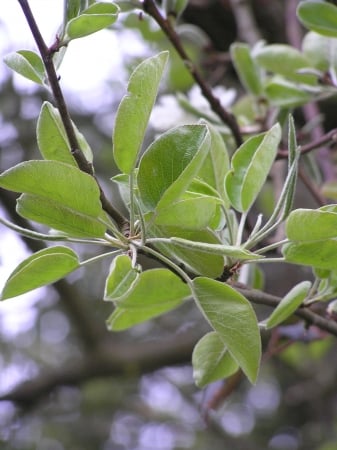
Wild pear
Pyrus pyraster
The wild pear has much smaller, hard, astringent fruits, and often thorny twigs — the cultivated pear has none.
🍃 Leaves
Ovate, finely toothed, long petiole, glossy
Round to ovate, finely toothed, with long petioles
🌸 Flowers
White, in corymbs, appearing with or just before the leaves
White, in small clusters, before the leaves
🍎 Fruits
Fleshy pear, with gritty flesh near the core, shape varying with the variety
Small, hard, astringent pears
🪵 Bark
Grey, cracking into small rectangular plates with age
Dark greyish-brown, cracking into small square scales, twigs often thorny
📏 Size
6 to 15 m tall
8 to 15 m tall
🗺️ Habitat
Orchards and gardens; cultivated throughout France
Hedgerows, woodland edges, open woods
⚠️ Toxicity
Fruit flesh edible; the pips contain small amounts of amygdalin, harmless in normal use
No known toxicity; fruits very sour and astringent, edible once bletted
🔎 And from the Wild pear side
The wild pear has much smaller, hard, astringent fruits, and often thorny twigs — the cultivated pear has none.
🌿 Go further
Want to practise spotting these details on real photos? Floraneo offers profiles and quizzes for dozens of look-alike species.
ℹ️ Educational profile — do not use it to judge whether a plant is edible or safe.